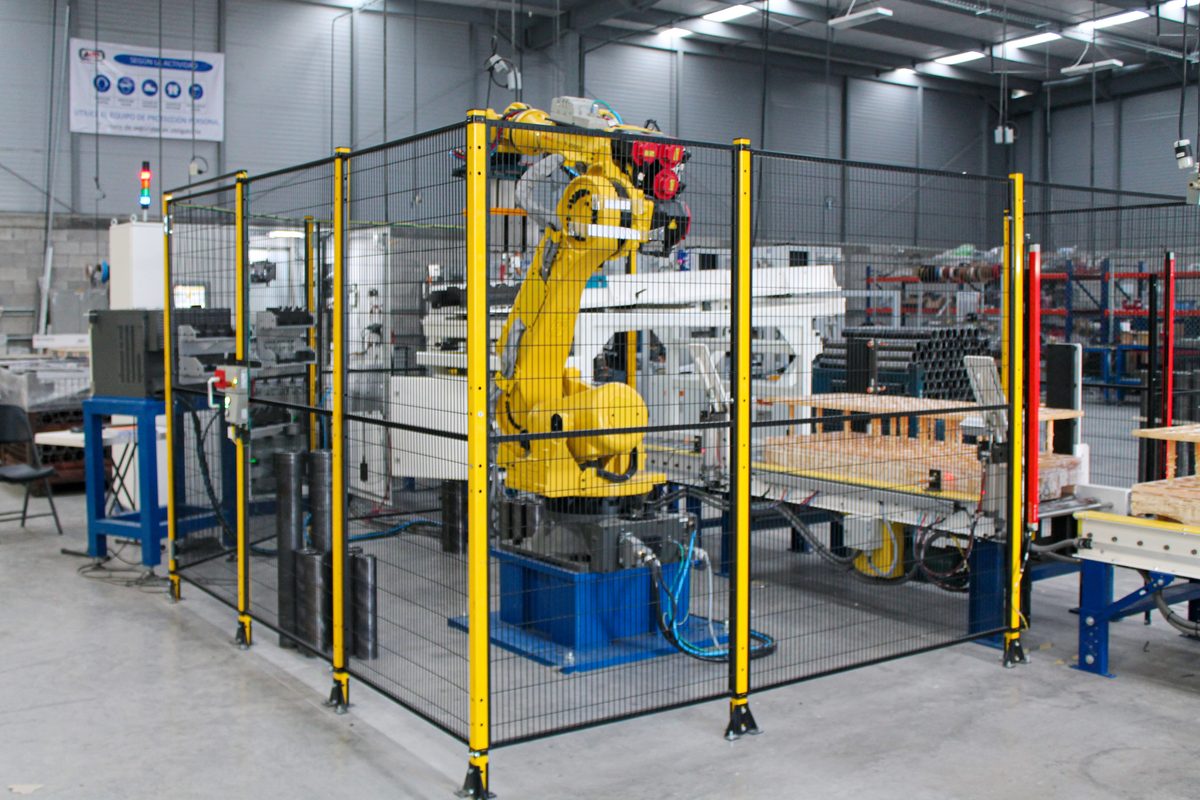
Material handling is one of the most financially compelling targets for automation. Moving parts, loading machines, transferring assemblies between stations, and palletizing finished goods are labor-intensive tasks with straightforward ROI calculations — you can measure the labor hours, count the injuries, and quantify the throughput constraints without complex assumptions.
Most material handling automation projects achieve payback in 10 to 18 months. Here is how to build the ROI case for your specific application and avoid the modeling mistakes that inflate or undercount the real returns.
Why Material Handling Delivers Strong ROI
Material handling tasks share characteristics that make them ideal automation candidates:
High labor intensity with low skill requirements. Moving parts between stations, loading conveyors, and stacking pallets are physically demanding but procedurally simple. The operator's value is their physical availability, not their process knowledge. This means automation displaces labor hours without losing institutional knowledge.
Repetitive motion injury exposure. Material handling accounts for a disproportionate share of workplace injuries. Bureau of Labor Statistics data consistently shows that overexertion and repetitive motion from lifting, carrying, and placing materials cause more manufacturing injuries than any other category. Workers' compensation claims, light-duty assignments, and OSHA recordables all carry quantifiable costs that belong in your ROI model.
Direct throughput bottleneck. In many operations, the material handling steps between value-adding stations are the constraint — not the machining, welding, or assembly operations themselves. Automating the transfer between operations unlocks capacity you have already paid for in your production equipment.
Multi-shift scalability. Automated material handling runs continuously across all shifts without the attendance variability, fatigue effects, and overtime premiums that accumulate in manual operations.
ROI Model by Material Handling Type
Conveyor and Transfer Systems
Automated conveyor systems replace manual part transport between workstations. The investment is typically $150,000 to $500,000 depending on line length, integration points, and whether the system includes accumulation, sorting, or divert logic.
The ROI drivers are labor displacement (1 to 4 material handlers per shift depending on line complexity), throughput improvement from consistent transfer times, and WIP reduction from controlled flow.
A practical example: a manufacturer running a 6-station assembly line with two material handlers per shift transferring parts manually between stations. Fully burdened labor cost at $58,000 per handler, two shifts, four handlers total: $232,000 in annual labor. An automated transfer conveyor at $280,000 total installed cost delivers payback in approximately 14 months — and that excludes the throughput gain from eliminating the variability of manual transfers.
Robotic Palletizing
Palletizing is often the single strongest ROI case in a facility. End-of-line palletizing positions are physically punishing — operators lift 30 to 60 pound cases repetitively at rates of 8 to 15 cases per minute. Turnover in these positions commonly exceeds 40 percent annually, and each departure costs $4,000 to $8,000 in recruiting, onboarding, and productivity loss during the learning curve.
Robotic palletizing systems typically cost $200,000 to $400,000 fully installed, including the robot, end-of-arm tool, conveyor infeed, and safety guarding. A single palletizing robot handles rates that would require 2 to 3 manual operators, across all shifts without breaks or variability.
Annual benefit calculation for a two-shift operation displacing 2 operators per shift at $60,000 fully burdened: $240,000 in direct labor savings, plus $12,000 to $24,000 in avoided turnover costs, plus workers' compensation premium reduction. Payback: 10 to 15 months.
For operations running mixed-case or multi-SKU palletizing, the investment is higher due to vision integration and more complex programming, but the labor savings scale proportionally because mixed palletizing is even more labor-intensive manually.
AGVs and Autonomous Mobile Robots (AMRs)
Autonomous mobile robots for material transport represent a newer segment with different ROI dynamics. The investment model often involves fleet deployment — 3 to 10 AMRs replacing forklift operators or material handlers who transport parts between warehouse and production areas.
Individual AMR costs range from $30,000 to $150,000 depending on payload and navigation sophistication. Fleet deployments including fleet management software, charging infrastructure, and integration with WMS or MES systems typically run $200,000 to $800,000.
The payback model differs from fixed automation because AMRs can be incrementally deployed and redeployed as facility layouts change. Start with a pilot fleet covering one high-traffic route, prove the ROI, then expand. This staged approach reduces risk and lets you validate assumptions before committing the full capital.
Payback for AMR fleets typically runs 14 to 24 months, with the wide range reflecting differences in utilization (a busy facility gets more hours per day from each robot) and the labor rate being displaced (forklift operators command higher wages than general material handlers in most markets).
Costs That Get Missed
The general automation ROI framework applies here, but material handling projects have specific cost elements that frequently get underestimated:
Floor preparation. Conveyors and robotic cells need level floors with adequate load-bearing capacity. If your facility has uneven concrete or insufficient floor ratings, remediation can add $10,000 to $50,000.
Facility modifications. Utility drops (compressed air, electrical), overhead clearance for robot reach envelopes, and revised traffic patterns for AGV lanes all carry costs.
Integration with upstream and downstream equipment. A palletizing robot needs to receive parts from something and place pallets onto something. The infeed conveyor, pallet dispenser, and stretch wrapper integration adds scope and cost.
Changeover tooling. If you run multiple product formats through the same material handling system, you need tooling sets for each format. Multi-format end-of-arm tooling can cost $15,000 to $40,000 per additional format.
Building the Business Case
When presenting material handling automation ROI to leadership, lead with the injury and ergonomic data alongside the financial numbers. Operations leaders and safety managers are natural allies for these projects because material handling injuries are visible, costly, and persistent.
Include the turnover cost explicitly — it is a real cash expense that HR can validate, and in a tight labor market it often tips borderline projects into approval.
For a complete framework on structuring the financial analysis, including sensitivity modeling and NPV calculations, see our ROI calculator and payback guide.
Ready to evaluate material handling automation for your operation? Contact our engineering team to discuss your application and get realistic cost and payback estimates based on your specific throughput, labor, and facility requirements.
We'll give you an honest assessment - even if it means recommending a simpler solution.